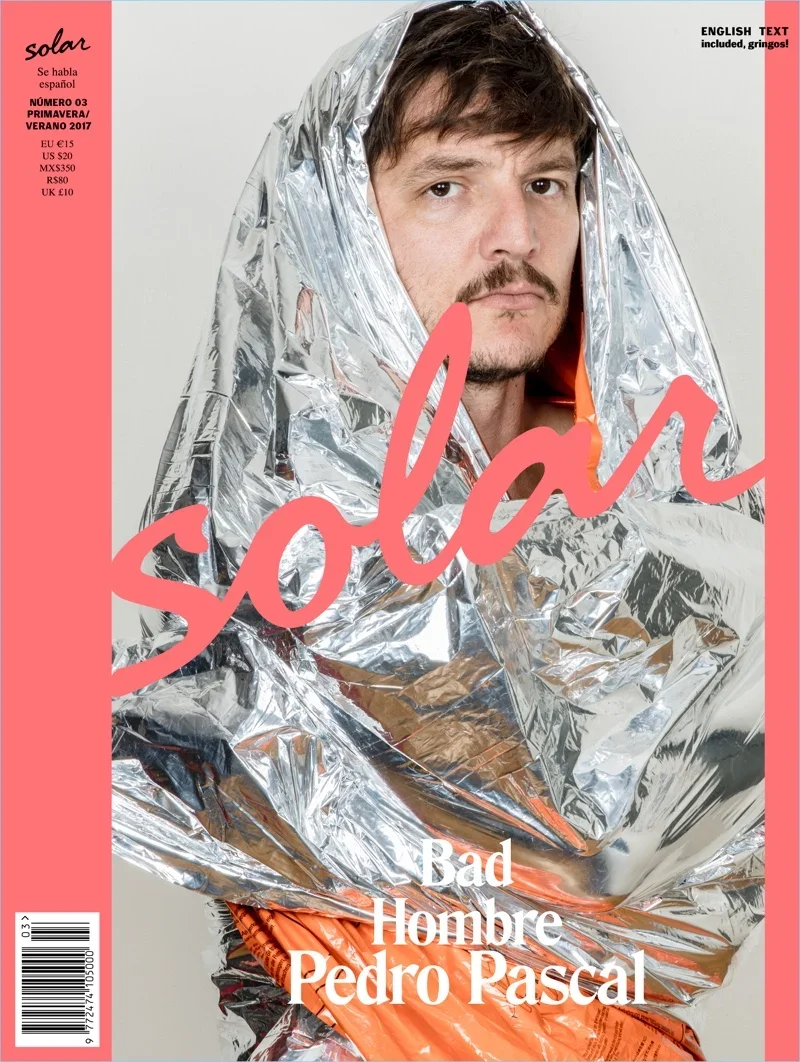
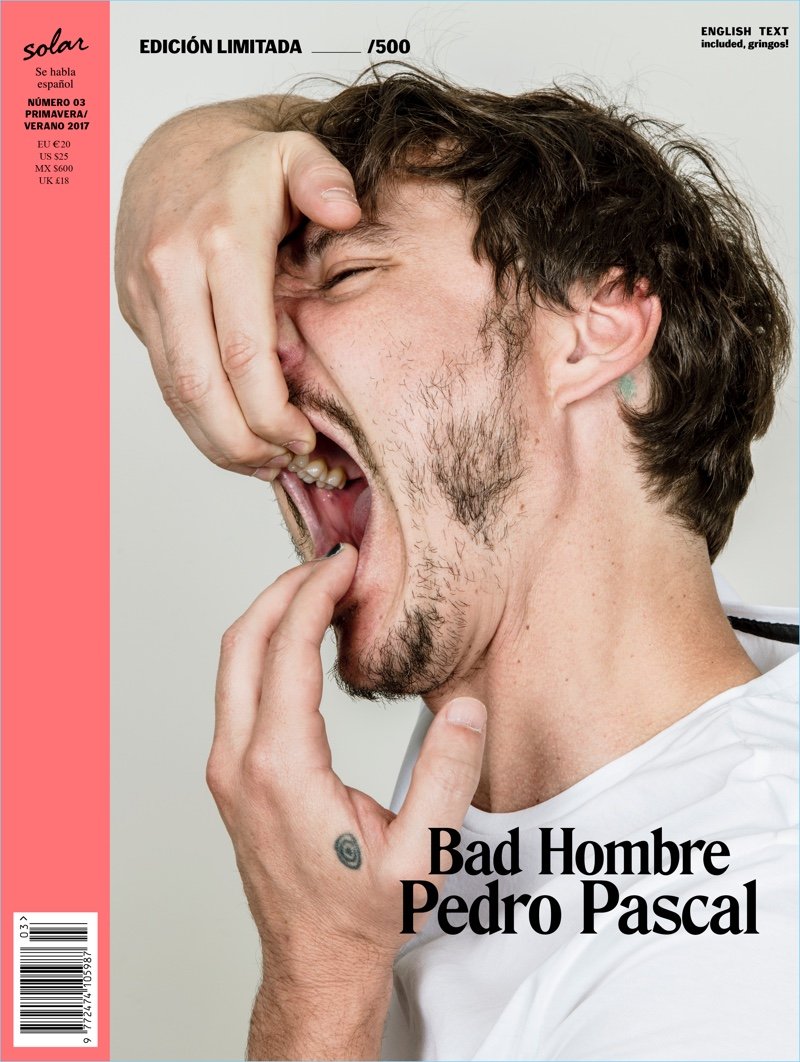
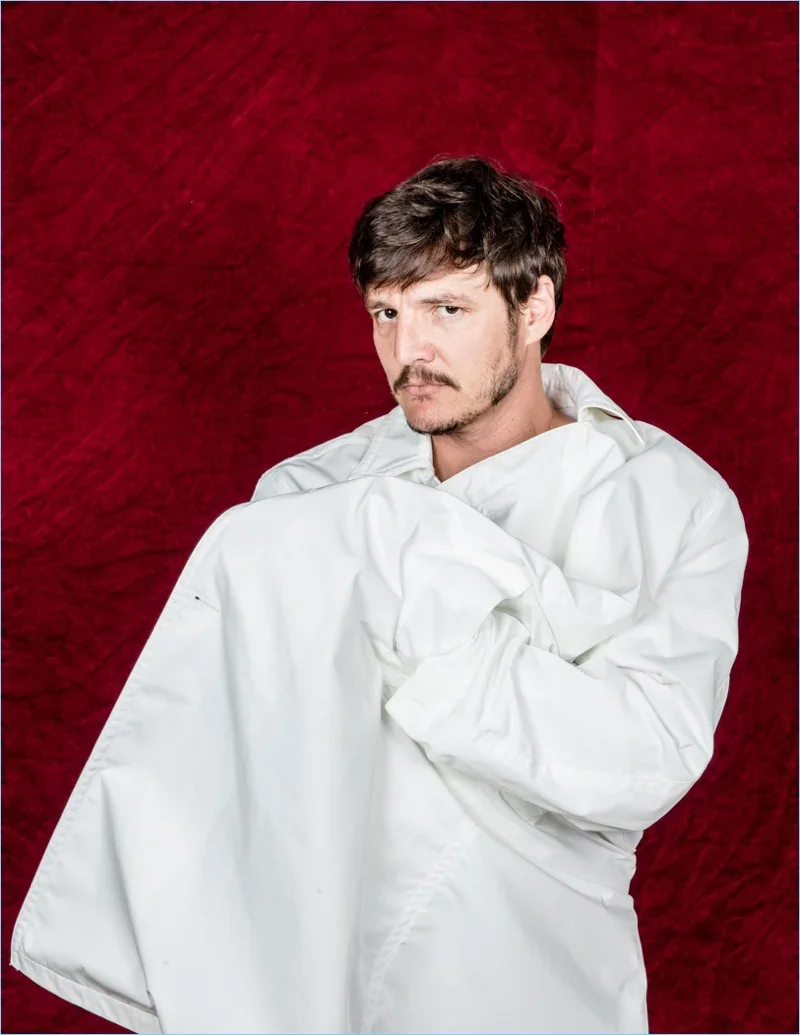
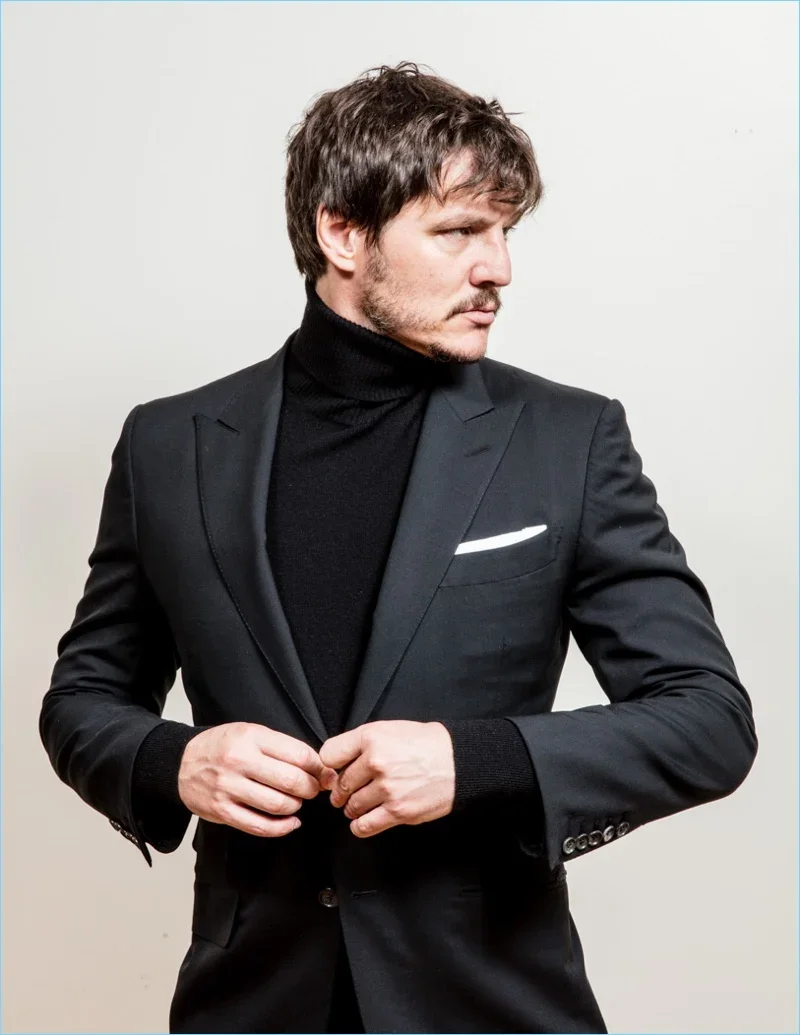
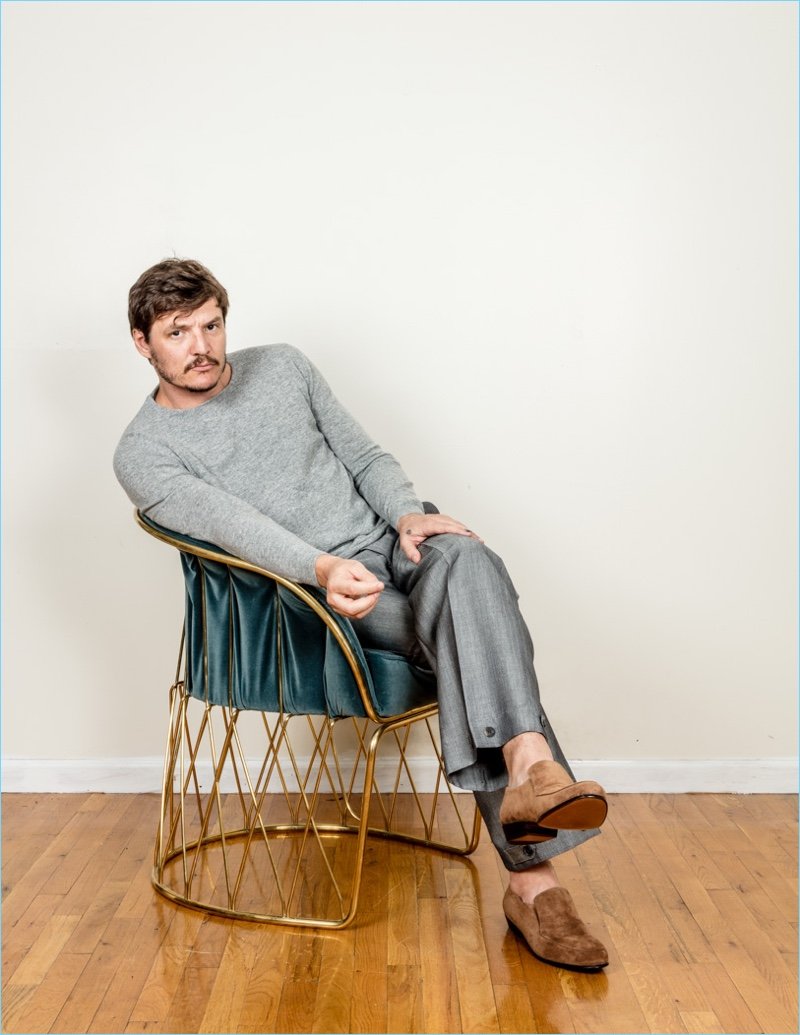
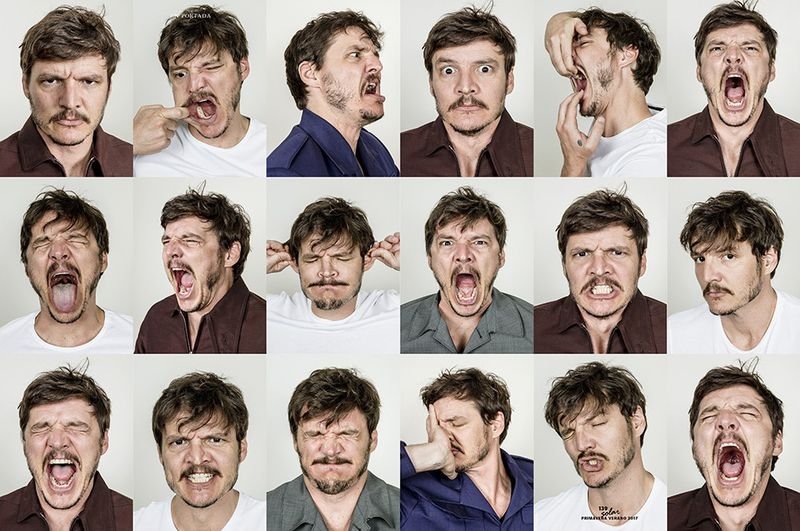
Is This Your Bad Hombre?
Pedro Pascal and Good Television in an Era of Terrible Politics
Solar Magazine — Spring/Summer 2017
Interview: Igor Ramírez-García Peralta
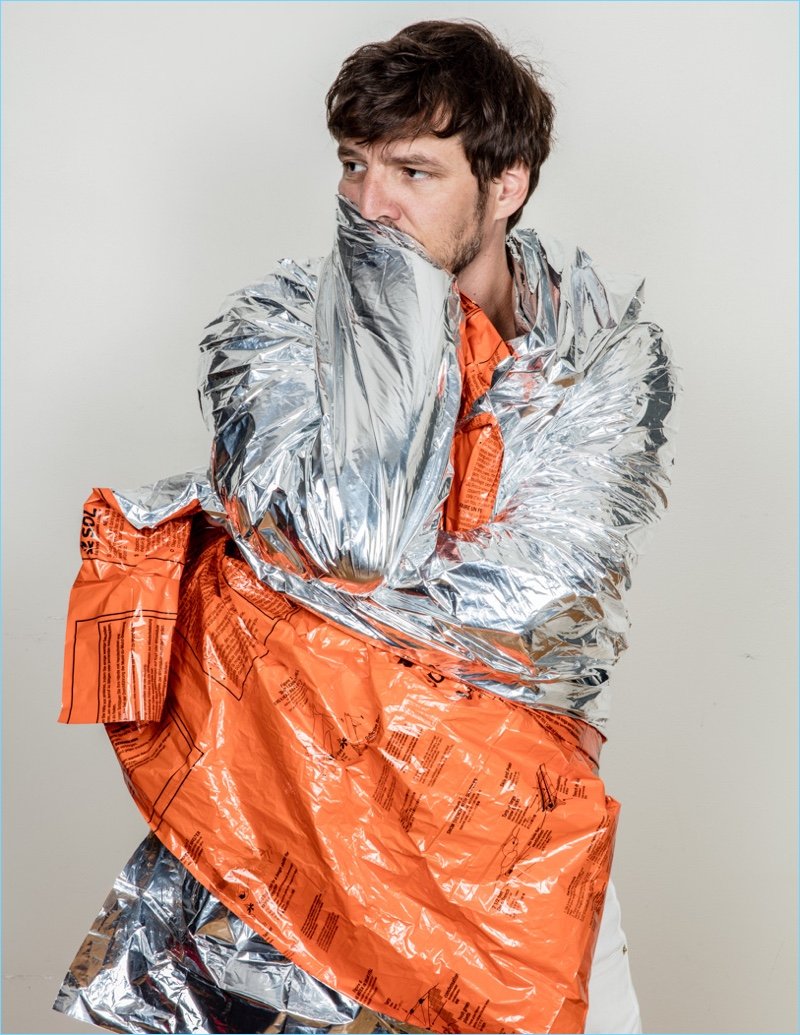
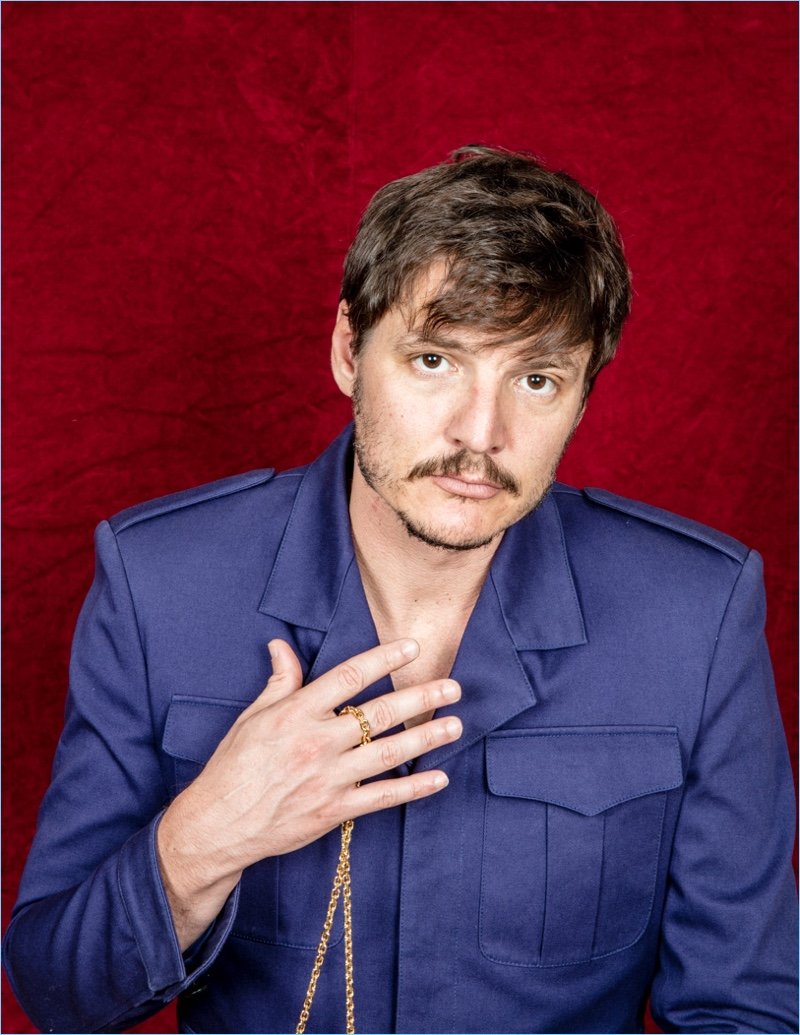
Photography: Stefan Ruiz
Styling: Michaela Dosamantes
English Translation
Pedro Pascal belongs to a new breed of Hollywood star, one that has replaced the insufferable diva attitude with good manners. It is as simple and straightforward as that.
At a time when life is too short for nonsense, he seems to understand this very well. Maybe it is because he has never had time for foolishness — when he was nine months old, his parents fled Pinochet’s dictatorship, eventually making their way to the United States via Denmark — or perhaps because he had plenty of time for it and eventually grew tired of it. Success came relatively late, at 38, with his breakthrough role as the polysexual Oberyn Martell in the fourth season of Game of Thrones.
It is clear to me that Pedro is in his best moment. So far.
During the six months this issue will remain in circulation, he has three premieres: The Great Wall, directed by Zhang Yimou, in which he shares the screen with Matt Damon and Willem Dafoe; the Kingsman sequel, co-starring Julianne Moore, Channing Tatum, Halle Berry, Jeff Bridges and Colin Firth; and, finally, the highly anticipated third season of Narcos, the series in which he plays Agent Javier Peña and which has earned him at least as many fans as Martell did.
Between overseas shoots, photo sessions and visits to his family in Chile, a mutual friend put us in touch. One of the countless voice messages we exchanged while trying to coordinate an interview, breakfast, photo shoot, attempted dinners and drinks between Colombia, London and Manhattan simply said:
“Welcome to… [dramatic pause] Colombia.”
I arrived on the Narcos set in downtown Bogotá on Thanksgiving Day.
His two American colleagues, Eric Lange and Brett Cullen, were growing desperate with the elasticity of South American minutes during a day that seemed never-ending, while a DEA agent — a real one — waited for them at home with plenty of turkey, whiskey, American football and a healthy dose of testosterone.
Meanwhile, Lucas — Pedro’s younger brother, who would have a small role in the upcoming season — and I entertained ourselves by breaking the legendary folding chairs bearing the names of the show’s stars. It was an accident, but they ended up in pieces.
Interviewing and photographing Pedro has been a rare luxury in journalism. It was a process that stretched across months but remained continuous, taking place in different settings and stages, allowing me to know him considerably better than I normally get to know the people we put on our covers.
Through twists of fate, in addition to Lucas, I also met his sister in Miami. And it turns out that Francisco Celhay, the other Chilean actor included in this issue, is Pedro’s first cousin.
Beyond what appears in the conversation transcribed below, I can add that Pedro does not have any food allergies, although since he was 20 he has known that he is allergic to cocaine; that his spirit animal is Tigger, Winnie the Pooh’s companion; that he insists he does not consider himself handsome — someone once told him he looked like Orlando Bloom after being hit in the face with a shovel — and that, every once in a while, he thinks about a dog with a chewed-up ear that often visits the set in Cali and waits outside his trailer.
Pedro: we beg you to adopt it.
Narcos rubs salt into wounds that are still very open in Colombia. The history of Escobar and the Medellín and Cali cartels is very recent. How do you process that, and what has it meant for your role?
It’s quite complex. On one hand, it’s understandable that Colombians are tired of the subject. I had already been to Colombia before coming here to shoot Narcos. I know the country, its people, its land, politics and culture well beyond that issue, and I find it unfortunate that the rest of the world automatically associates narco culture with this country.
We shoot almost entirely on location, and every time someone approaches and asks what we’re doing, the reaction when they hear it’s Narcos is always the same: disappointment.
However, I think it’s interesting that a series like this, with a worldwide audience, gets to show Colombia’s visual power. Colombia has a very complex, beautiful, cinematic texture.
Its people and culture are reflected in the land, and we’ve managed to capture that visually. In fact, I think that’s one of the central elements of the story — sometimes even more important than the dramatic and violent events themselves.
The locations where we film add another dimension to the story and make everything feel much more real. The fact that we are here gives it a great deal of authenticity. It doesn’t matter that there are Mexicans, Spaniards and Brazilians playing Colombians; there is an authenticity that allows the story to communicate far more than the audience might expect.
That’s why we’ve been so successful, I think — not only because of the sensationalism, violence, darkness and sexuality of the history of Colombian drug trafficking.
Did you imagine you would make it to season three?
Honestly, no. I knew I was going to be in two seasons, regardless of how successful the first one was. They had a story for Escobar that lasted two seasons, and my character, Agent Peña, was part of both.
After the success of the first season, I knew the series would continue. After all, the intention was never for the story to focus exclusively on Escobar, but on the history, politics and reality of drug trafficking.
What I didn’t know, and genuinely didn’t expect, was that I would be back for the third season. Of all the characters surrounding Escobar, I thought I would be the last one they’d invite back.
Netflix has changed the way television series are produced, distributed and consumed. What do you think about that?
It’s incredible. The whole industry changed in five years. Actually, really, in one.
They started with the success of House of Cards, which wasn’t even their first series — that was another show nobody knows called Lilyhammer.
The year we started Narcos, I think they were making around twelve original productions. Now I’ve lost count.
And I confess I’m a victim of what they do, because I watch everything.
I know it sounds absurd, but compared with what is happening in the politics of the Western world right now, where everything is so bleak, disappointing and alarmingly regressive, television is progressing when it comes to subject matter, culture, representation of diversity and the risks being taken with the stories being told.
Do you prefer working in film, television or theater?
For me, the ideal is working in all three, like all of my colleagues do.
I moved to New York when I was 18 to study, and I swear I nearly killed myself trying to get roles in off-Broadway productions. My friends were actors who primarily did theater, but they also worked in television and film — some more successfully than others, obviously — and in our community we understood that you had to do everything.
I think television is the hardest medium because of the schedules.
A colleague who worked with Holly Hunter on her first television series, after she had already had a very successful career in film and theater, told me she once said to him:
“Television isn’t for pussies.”
It’s funny that she would say that after busting her ass her entire life as an actress, but it’s true. The schedules are incredibly intense and the days are endless.
In that sense, Narcos is a peculiar challenge because, in some ways, we’re inventing it as we go.
It depends heavily on the locations — which are unpredictable — but at the same time we have a script that has to be respected.
To sum it up, I wouldn’t say I prefer one medium in particular. Television is the most grueling. Theater feels the most familiar to me. And film is, in a way, the dismantling of a childhood fantasy because it is genuinely the least glamorous experience you can have — at least in my experience.
You can be working on a $150 million production while sitting in mud, surrounded by an absolutely terrible smell and flies.
Do you take on characteristics of the characters you play?
I’ve been acting for twenty years and I still don’t know.
It takes me a while to realize how a project or character may have affected me. Sometimes I’ve had dreams that made me realize the role had gotten too far inside of me. Other times I can’t sleep or I’m in a terrible mood, but I forget that I’ve been researching extremely violent stories and performing very dark scenes.
And it’s ridiculous because instead of connecting that with the fact that I can’t sleep, that my jaw is tense and that I feel uncomfortable, I think maybe I’m lactose intolerant, or I have some allergy, or I shouldn’t have eaten that pizza.
I’m so used to all of this that I simply experience it as work.
To be sincere, I have a hard time understanding actors who fill their walls with photographs and clippings and never stop talking about all the research they’ve done to create their character.
Instinctively, I’m the opposite. I don’t really want to talk about it.
I’ve never felt comfortable talking about my character and their story. Obviously I think about it, but I don’t talk much about it. I don’t know whether that’s because I’m protecting a method that works for me or simply because I’m fucking lazy.
You work on location a lot: China, Colombia, Croatia… and for very long stretches. What happens to your private life?
What happens to my private life?
Simple answer: I don’t have one.
My life is work and tourism.
It’s strange to have these kinds of adventures when you’re already an adult. Ever since I was a child I fantasized about working in movies, and after surviving the inevitable heartbreaks that come with growing up, with being alive and, above all, with wanting to be an actor, it’s both ironic and funny to achieve your childhood dream at 40.
You miss your home, your bed, your friends, your comforts and your routine, but it’s interesting to have all of that interrupted — especially at this age — because I think I can absorb the experience with much more perspective and maturity.
What was your experience like in China while filming The Great Wall?
I loved it.
I had never set foot in China until I found myself there for five months working with one of my favorite directors, Zhang Yimou, someone I never even imagined I would cross paths with.
And alongside fucking Matt Damon and Willem Dafoe!
Matt, frankly, is one of the best people I’ve ever met. Not one of the best famous people I’ve met — one of the best people, period.
He was there with his family, his wife — who is even better than he is — and their children.
And I’ve been watching Willem Dafoe’s movies since I was a kid, so it was an incredible privilege handed to me on a silver platter.
At the same time, it was extremely hard work because it was a complicated movie and also shot extensively on location.
And London, for the Kingsman sequel?
I had been to London many times, but always on short trips, and suddenly I was there for four months.
I had always fantasized about living there, and it exceeded every expectation.
I was there when the Brexit referendum happened, and the atmosphere of the city changed from one day to the next. It was frightening and sad. It broke my heart to see so many people in shock, unable to understand a result nobody had expected.
Even so, I was able to immerse myself, as an outsider, in the culture of a city that I find extremely progressive and multicultural, inclusive and wild — a little dark, but friendly.
The concept of the previous issue of Solar was “Respect Your Idols!”, a kind of vote in favor of not losing the excitement of meeting them and remembering what they have meant to you; not allowing the fan inside you to die, regardless of how close you may eventually become to the idols of your childhood as you enter the industry. What has that been like for you?
It’s funny you ask, because I’m still a huge fan.
I think that characterizes me as much as my work does. Besides being an actor, I’m a spectator.
I connect it with being a Chilean immigrant in the United States, with how young my parents were and how unstable their lives were when I was born, and with how popular culture, movies and cable television socialized us and, in a way, educated my sister and me.
Eventually, a fantasy became a hobby, and that hobby became my profession.
Basically, I don’t hide the fact that I’m a fan.
Kingsman was a particularly interesting experience because it was a fucking circus filled with fabulous movie stars: Halle Berry, Jeff Bridges, Julianne Moore, Colin Firth, Channing Tatum and Taron Egerton, who, despite being new to the industry, is a fucking boss.
It was all a little overwhelming and frightening, but I think the little fan inside me is so dominant that he managed to overcome my fear of working surrounded by those people.
I have to say I managed to control myself — but only until we finished filming.
As soon as Halle Berry was released from the shoot, I tearfully told her that I had seen Jungle Fever, which I love, that her character in Monster’s Ball destroyed me and that I cried when she won the Oscar.
I did the same thing with Julianne Moore and everyone else until they were sick of me.
I know you’re a good guy. I can sense it. I see it in you, in your family and in the way you relate to the people around you. Have you always been that way?
I can’t even imagine everything my parents went through when they escaped Chile, and that has left me with an inherited sense of guilt that may have shaped the way my siblings and I navigate the world.
We’ve also experienced very tragic losses in my family, and that helps you focus on what is truly important and on how you should treat people.
I don’t know what I believe in.
I’m completely agnostic, and the idea of a god seems pretty silly to me.
I don’t mean spirituality is foreign to me, but I haven’t developed any particular relationship with that concept.
What I do know is that the most valuable thing is being a good person.
Deep down, I think that matters far more than being famous, powerful or any of that stuff. I can’t take any of that shit to the grave with me.
But I haven’t always been this way.
By the time I was 12, we were living in a very privileged situation and, compared with other people, I was a pretty spoiled kid.
Then all of that ended, and I had to learn the hard way in New York.
Maybe if things had continued being as easy as they were when I was in high school, I’d be an asshole now.
Maybe it’s some combination of genes, the way our parents raised us and the fact that I busted my ass for more than fifteen years in New York.
That shapes you, and it also teaches you how to behave.
You spent almost twenty years auditioning. What motivated you to keep going and not give up?
I didn’t know how to do anything else.
There comes a point, especially if you become a movie and theater nerd, when it becomes part of your identity.
Eventually, training, practicing and fighting become ordinary. They stop feeling like some enormous challenge.
In fact, changing paths was what frightened me.
I think I had fully accepted the possibility of becoming that typical actor who is always struggling, right up until the day I could no longer climb the stairs to an audition.
Because, like I said, I didn’t know how to do anything else and I was too lazy to learn.
And, well, I also had this unfounded hope that I could actually make it.
And luck. I’ve been very lucky.
No matter how fucked up things got, there was always something: a job, a theater production, an experience, a residual check from an episode of Buffy the Vampire Slayer — which paid half the rent — or a play somewhere outside Boston.
Every time it seemed like I wasn’t going to make it through the month financially or emotionally, something would appear at the last possible moment that kept me afloat and allowed me to keep going.
Español Original
Is This Your Bad Hombre?
Pedro Pascal y la buena televisión en épocas de pésima política
Pedro Pascal pertenece a una nueva estirpe de estrellas de Hollywood. Una que ha reemplazado la actitud de diva insufrible por la buena educación; así de simple y de tajante.
En una época en la que la vida no nos alcanza para tonterías, él parece haberlo entendido muy bien. Puede ser porque no ha tenido tiempo para andarse con chorradas —cuando tenía nueve meses, sus padres huyeron de la dictadura de Pinochet—, o bien porque ha tenido demasiado tiempo para hacerlo, hasta hartarse de ello. El éxito le llegó relativamente tarde, a los 38 años, con su breakthrough role del polisexual Oberyn Martell en la cuarta temporada de Juego de Tronos.
Me queda claro que Pedro está en su mejor momento. Hasta ahora.
En los seis meses que esta revista permanecerá en circulación tiene tres estrenos: The Great Wall, dirigida por Zhang Yimou y en la que comparte créditos con Matt Damon y Willem Dafoe; la secuela de Kingsman, coprotagonizada con Julianne Moore, Channing Tatum, Halle Berry, Jeff Bridges y Colin Firth; y, por último, la muy anticipada tercera temporada de Narcos, la serie en la que interpreta al agente Javier Peña y que le ha supuesto el mismo número de fans, por lo menos, que el personaje de Martell.
Entre sus rodajes ultramarinos, sesiones de fotos y visitas a su familia en Chile, un amigo en común nos puso en contacto. Uno de los incontables mensajes de voz que intercambiamos para coordinar entrevista, desayuno, sesión fotográfica, conatos de cenas y copas entre Colombia, Londres y Manhattan decía: «Bienvenido a… [pausa dramática] Colombia».
Llegué al plató de Narcos, en el centro de Bogotá, el Día de Acción de Gracias.
Sus dos colegas estadounidenses, Eric Lange y Brett Cullen, estaban desesperados con la elasticidad de los minutos sudamericanos en una jornada que parecía no tener fin, mientras que un agente de la DEA —uno de verdad— los esperaba en casa con mucho pavo, whisky, fútbol americano y una buena ración de testosterona.
Mientras tanto, Lucas —el hermano menor de Pedro, que tendrá un pequeño papel en la próxima entrega de la serie— y yo nos entreteníamos rompiendo las míticas sillas plegables con los nombres de los protagonistas de la serie. Fue sin querer, pero quedaron hechas pedazos.
Entrevistar y fotografiar a Pedro ha sido un lujo que pocas veces se da en el periodismo. Un proceso de meses, pero continuo, en distintos contextos y por etapas que me ha permitido conocerlo bastante más de lo que normalmente puedo conocer a quienes plantamos en nuestras portadas.
Por caprichos del destino, además de a Lucas, también conocí a su hermana, en Miami, y resulta que Francisco Celhay, el otro actor chileno que incluimos en este número, es su primo hermano.
De lo que se escapa de la charla que transcribimos a continuación puedo añadir que Pedro no tiene ninguna alergia alimentaria, pero que, desde que tenía 20 años, sabe que es alérgico a la cocaína; que su spirit animal es Tigger, el compañero de Winnie the Pooh; que asegura no saberse guapo —alguien le dijo que se parecía a Orlando Bloom después de que le dieran un palazo en la cara— y que, de vez en cuando, se acuerda de un perro, con una oreja mordisqueada, que suele visitar el plató en Cali y plantarse fuera de su caravana.
Pedro: te rogamos que lo adoptes.
Narcos le echa sal a unas heridas que todavía están muy abiertas en Colombia. La historia de Escobar y los carteles de Medellín y Cali es muy reciente. ¿Cómo digieres esto y qué ha supuesto para tu papel?
Es bastante complejo. Por un lado, se entiende que los colombianos estén cansados del tema. Yo ya había estado en Colombia antes de venir a rodar Narcos. Conozco el país, su gente, su tierra, su política y cultura mucho más allá de ese tema y me parece desafortunado que el resto del mundo asocie la narcocultura necesariamente con este país.
Filmamos casi siempre en localizaciones, y cada vez que alguien se acerca a preguntar qué estamos haciendo, la reacción al saber que se trata de Narcos es siempre la misma: desencanto.
Sin embargo, creo que es interesante que una serie como esta, con una audiencia mundial, muestre su poder plástico. Colombia tiene una textura muy compleja, linda, cinematográfica.
La gente y la cultura se reflejan en su tierra y hemos logrado capturar eso visualmente; de hecho, creo que este es uno de los elementos centrales de la trama; en algunos momentos, incluso, más importante que los acontecimientos dramáticos y violentos.
Las localizaciones donde filmamos añaden una dimensión a la historia y hacen que todo parezca mucho más real. El hecho de que estemos aquí da mucha autenticidad; no importa que haya mexicanos, españoles y brasileños interpretando a colombianos, hay una autenticidad que permite que la historia narre mucho más de lo que la audiencia podría esperar.
Por eso hemos tenido tanto éxito, no solamente por el sensacionalismo, la violencia, la oscuridad y la sexualidad de la historia del narcotráfico colombiano.
¿Te imaginabas que llegarías hasta la temporada tres?
Sinceramente, no. Sabía que iba a participar en dos temporadas, independientemente del éxito de la primera. Tenían un guion para Escobar que duraba dos temporadas y mi papel, el agente Peña, formaba parte de ambas.
Después del éxito de la primera, supe que la serie iba a continuar. A fin de cuentas, en ningún momento se pretendió que la trama se centrara exclusivamente en Escobar, sino en la historia, la política y la realidad del narcotráfico.
Pero lo que no sabía, y realmente no me esperaba, era que yo fuera a salir en la tercera temporada. De los personajes en torno a Escobar, pensaba que sería el último a quien invitarían a regresar.
Netflix ha cambiado la manera en que se producen, distribuyen y consumen las series de televisión. ¿Qué piensas al respecto?
Es increíble, toda la industria cambió en cinco años. Bueno, en realidad, en uno.
Empezaron con el éxito de House of Cards, que ni siquiera fue la primera serie —fue otra que nadie conoce llamada Lilyhammer—.
El año que empezamos Narcos iban a hacer, creo, doce producciones originales. Ahora ya he perdido la cuenta…
Y confieso que soy víctima de lo que hacen, porque lo veo todo.
Sé que suena absurdo pero, comparado con lo que está sucediendo en la política del mundo occidental ahora mismo, donde todo es tan desolador, decepcionante y alarmantemente retrógrado, la televisión está progresando en cuanto a los temas, la cultura, la representación de la diversidad y los riesgos que se asumen con las historias que se narran.
¿Prefieres trabajar en cine, televisión o teatro?
Para mí, lo ideal es trabajar en los tres medios, como hacen todos mis colegas.
Me mudé a Nueva York cuando tenía 18 años para estudiar y te juro que casi me dejo la vida intentando obtener papeles en producciones off-Broadway. Mis amigos eran actores que hacían principalmente teatro, pero también televisión y cine, algunos con más éxito que otros, obviamente, pero en nuestra comunidad entendíamos que tocaba hacer de todo.
Creo que la televisión es el medio más arduo por los horarios.
Un colega que trabajó con Holly Hunter en su primera serie de televisión, después de una carrera muy exitosa en cine y teatro, me contó que ella le había dicho: «Television isn’t for pussies».
Es curioso que ella haya afirmado eso, después de haberse partido el lomo toda la vida trabajando como actriz, pero es verdad. Los horarios son muy intensos, las jornadas, interminables…
En ese sentido, Narcos es un reto peculiar, porque, en cierta forma, se inventa según vamos avanzando.
Depende mucho de las localizaciones —y estas son impredecibles—, pero, al mismo tiempo, tenemos un guion que hay que respetar.
Por resumir te diría que no prefiero un medio en concreto. La televisión es el más pesado; el teatro me resulta la experiencia más familiar, y el cine supone, en cierta forma, el desmantelamiento de una fantasía infantil, porque es, verdaderamente, la experiencia menos glamurosa que puedas tener. Por lo menos en lo que me ha tocado vivir a mí.
Estás en una producción de 150 millones de dólares, pero sentado en el fango, en una peste absoluta y rodeado de moscas.
¿Te apropias de características de tus personajes?
Llevo veinte años actuando y aún no lo tengo claro.
Tardo en darme cuenta de cómo me ha podido afectar un proyecto o un papel. Es verdad que, a veces, he soñado cosas que me confirmaban que el papel se me había metido demasiado dentro.
Otras veces no logro dormir o estoy de pésimo humor, pero se me olvida que he estado investigando historias muy violentas e interpretando escenas oscuras.
Y es ridículo pero, en vez de asociar eso con no poder dormir, tener la mandíbula tensa y sentirme incómodo, lo que pienso es que quizás sea intolerante a la lactosa o que tengo alguna alergia y que no me debería haber comido esa pizza…
Estoy ya demasiado acostumbrado a esto y simplemente lo siento como un trabajo.
Para serte sincero, me cuesta mucho entender a los actores que llenan sus paredes de fotos y recortes y no dejan de hablar de la investigación que han hecho para crear a su personaje.
Yo, en cambio, instintivamente, no quiero hablar mucho sobre el tema.
Nunca me he sentido cómodo hablando de mi personaje y de su historia. Obviamente, pienso en ello, pero no hablo mucho, no sé si por preservar un método que me funciona o simplemente porque soy fucking lazy.
Trabajas mucho en localizaciones: China, Colombia, Croacia… y por temporadas muy largas. ¿Qué pasa con tu vida privada?
¿Que qué pasa con mi vida privada?
Respuesta sencilla: no tengo.
Mi vida es trabajo y turismo.
Resulta extraño tener este tipo de aventuras siendo ya un adulto. Desde niño fantaseaba con trabajar en el cine y, después de sobrevivir los inevitables corazones rotos que vienen con la madurez, con estar vivo y, sobre todo, con querer ser actor, no deja de ser irónico y gracioso conseguir tu sueño de la infancia con 40 años.
Echas de menos tu casa, tu cama, tus amigos, tus comodidades y la rutina, pero es interesante que todo eso se interrumpa, y más a esta edad, porque creo que puedo absorber la experiencia con mucha más perspectiva y madurez.
¿Cómo fue tu experiencia en China, rodando The Great Wall?
La amé.
Nunca había puesto un pie en China hasta que me planté allí durante cinco meses para trabajar con uno de mis directores favoritos, Zhang Yimou, con el que ni siquiera imaginé cruzar caminos.
¡Y al lado de fucking Matt Damon y Willem Dafoe!
Matt, francamente, es una de las mejores personas que he conocido; no de las mejores personas famosas que he conocido, sino de las mejores personas y basta.
Estaba ahí con su familia, con su mujer —que es incluso mejor que él— y sus hijos.
Por otra parte, he visto desde que era niño todas las películas de Dafoe, así que fue un privilegio que me sirvieron en bandeja de plata, aunque, al mismo tiempo, un trabajo muy arduo, porque es una película complicada, también rodada en localizaciones.
¿Y en Londres, para la secuela de Kingsman?
Ya había estado muchas veces en Londres, pero siempre en viajes cortos, y de pronto, me tocó estar cuatro meses.
Siempre había fantaseado con la idea de vivir allí, y rebasó todas mis expectativas.
Estuve cuando se votó el referéndum del Brexit y la atmósfera de la ciudad cambió de un día para otro.
Fue aterrador, triste; me rompió el corazón ver a tanta gente en shock, sin entender un resultado que nadie hubiera podido predecir.
Aun con esto, pude sumergirme, como un outsider, en la cultura de una ciudad que para mí es extremadamente progresista y multicultural, inclusiva y salvaje; un poco oscura, pero amigable.
El concepto del número anterior de Solar era «¡Respeta a tus ídolos!», una especie de voto a favor de no perder la emoción al conocerlos y recordar lo que han significado para ti; no dejar que muera el fan dentro de ti, independientemente de lo cercanos que puedan llegar a ser los ídolos de tu infancia conforme te adentras en la industria. ¿Cómo ha sido esto para ti?
Es gracioso que lo preguntes, porque yo sigo siendo muy fan.
Creo que esto me caracteriza tanto como mi trabajo. Además de ser actor, soy espectador.
Lo relaciono con ser un inmigrante chileno en Estados Unidos, con lo jóvenes que eran mis padres y lo inestable que era su vida cuando nací y con cómo la cultura popular, el cine y la televisión por cable nos socializaron y, en cierta forma, nos educaron a mi hermana y a mí.
Después resultó que una fantasía se convirtió en un pasatiempo que, a su vez, se convirtió en mi profesión.
Vamos, que no escondo ser un fan.
Kingsman fue una experiencia particularmente interesante, porque era un jodido circo con estrellas de cine fabulosas: Halle Berry, Jeff Bridges, Julianne Moore, Colin Firth, Channing Tatum y Taron Egerton, quien, a pesar de ser nuevo en la industria, es un puto amo.
Todo era un poco abrumador y aterrador, pero creo que el pequeño fan que llevo dentro es tan dominante que logró que pudiera vencer el miedo a trabajar rodeado de esas personas.
He de decir que logré contenerme, pero solo hasta que acabamos el rodaje.
Apenas liberaron a Halle Berry, con lágrimas le dije que había visto Jungle Fever, que me fascina, que me mató su personaje en Monster’s Ball y que lloré cuando ganó el Óscar.
Lo mismo hice con Julianne Moore y con todos los demás, hasta que se hartaron.
Sé que eres un buen chico. Lo siento, lo veo en ti, en tu familia y en cómo te relacionas con la gente que te rodea. ¿Has sido siempre así?
No puedo ni imaginarme por todo lo que tuvieron que pasar mis padres cuando escaparon de Chile y eso me ha dejado una herencia de culpa que, quizás, haya determinado la manera en la que mis hermanos y yo navegamos por el mundo.
También hemos tenido pérdidas muy trágicas en mi familia, y eso te ayuda a concentrarte en lo que es realmente importante y en cómo debes tratar a la gente.
No sé en lo que creo. Soy completamente agnóstico y la idea de un dios me parece bastante tonta.
No quiero decir que la espiritualidad me sea ajena, pero no he desarrollado ningún vínculo con ese concepto.
Pero sí sé que lo más valioso es ser una buena persona.
En el fondo, creo que eso es mucho más importante que ser famoso, poderoso o cualquiera de esas cosas.
Toda esa mierda no me la puedo llevar a la tumba.
Pero no he sido siempre así.
Cuando tenía 12 años disfrutábamos ya de una situación muy privilegiada y, en comparación con otros, era un chico bastante mimado.
Después todo eso se acabó, y me tocó aprender por las malas en Nueva York.
Quizás, si las cosas hubieran seguido siendo tan fáciles como cuando estaba en el liceo, ahora sería un hijo de puta.
Puede ser una combinación de genes, de la educación que nos dieron mis padres y del hecho de que me partí el culo durante más de quince años en Nueva York.
Eso te forma y, además, te enseña cómo debes comportarte.
Pasaste casi veinte años haciendo audiciones. ¿Qué te motivó a seguir, a no darte por vencido?
No sabía hacer otra cosa.
Realmente llega un momento, sobre todo si te conviertes en un nerd del cine y el teatro, en el que se vuelve parte de tu identidad.
Al final, entrenarse, practicar y luchar se acaban convirtiendo en algo cotidiano y dejan de sentirse como el gran reto.
De hecho, cambiar era lo que me daba miedo.
Creo que había aceptado definitivamente la posibilidad de ser el típico actor que siempre está luchando, hasta el día que ya no pudiera subir las escaleras para hacer una audición, porque, como te he dicho, no sabía hacer otra cosa y era demasiado perezoso para aprender.
Y, bueno, también tenía la infundada esperanza de que lo podía lograr.
Y suerte. Tengo mucha suerte.
Por muy jodidos que estuvieran los tiempos, siempre había algo: un trabajo, una obra de teatro, una experiencia, un cheque de las regalías de un episodio de Buffy, cazavampiros —que pagaba la mitad del alquiler— o una obra en las afueras de Boston.
Cada vez que parecía que no iba a superar el mes financiera o emocionalmente, se presentaba algo en el último momento que conseguía mantenerme a flote y me permitía seguir.
Original Publication
Solar Magazine, Spring/Summer 2017
“Is This Your Bad Hombre? Pedro Pascal y la buena televisión en épocas de pésima política”
Interview by Igor Ramírez-García Peralta
Photography by Stefan Ruiz
Styling by Michaela Dosamantes